This article was first published April 28, 2026, in The Existentialist Republic and on Medium.
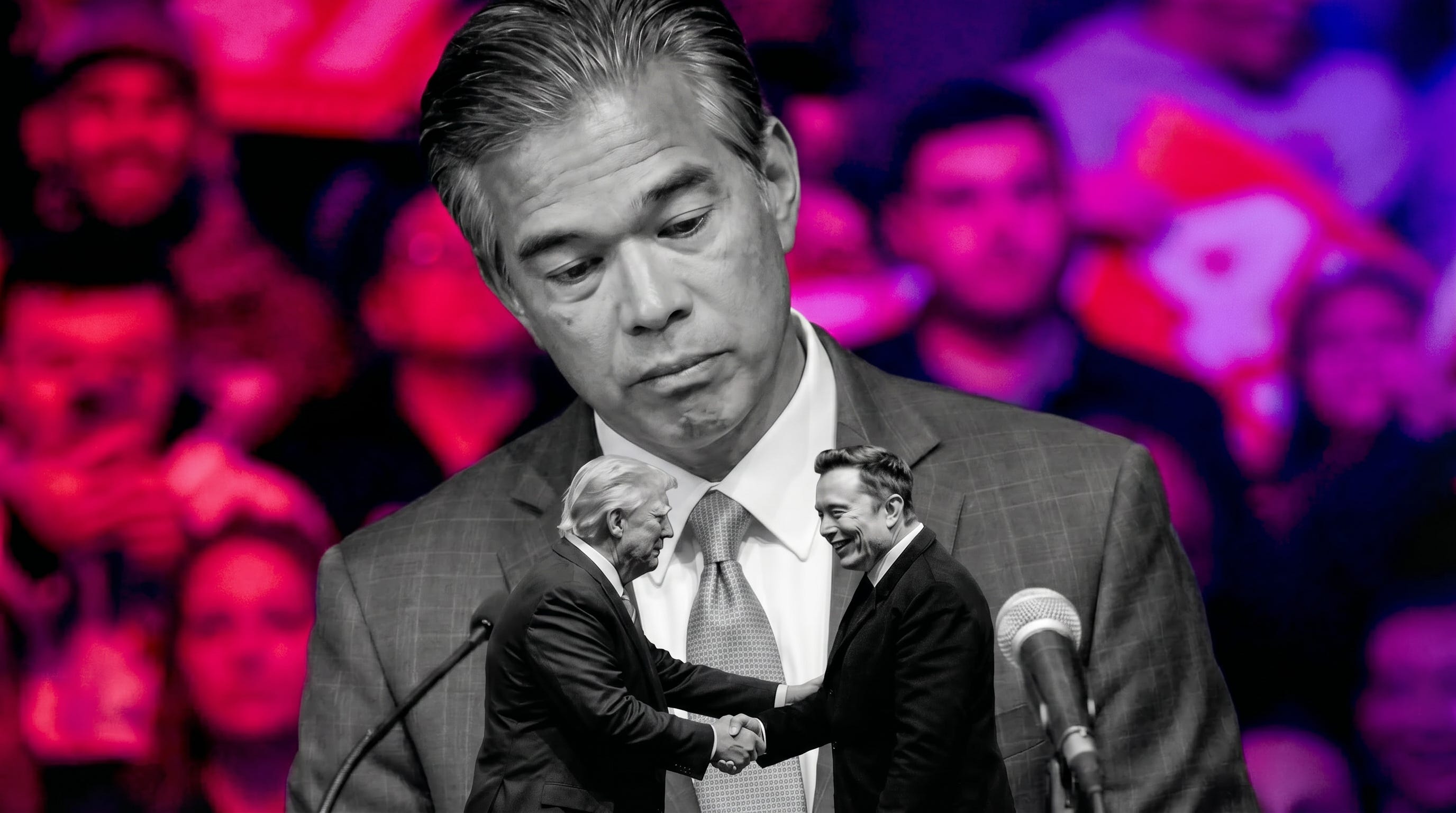
Imagine a federal employee drove drunk through a California neighborhood, hit three cars, and admitted on the record that he did it. Now imagine that rather than charging them with a DUI, the District Attorney filed a civil suit instead of pressing criminal charges, asked a judge to order the employee to stop driving drunk in the future, and called a press conference to announce the lawsuit as a major accountability win. Then imagine waiting six to twelve months for the federal government, not the employee, to cut a settlement check covering the damage to the cars while the employee himself faces no personal consequence and goes back to work the next morning. No one would call that justice. No one would call that the rule of law. That is what civil-only accountability for DOGE’s conduct looks like, and that highly celebrated shortfall is what every level of state government has offered so far.
In February, this publication walked through the laws that let every state in the country criminally investigate DOGE personnel for what they did at the Social Security Administration. Identity theft and cybercrime statutes let prosecutors charge crimes where the victim lives rather than where the defendant sat, a state conviction cannot be erased by a presidential pardon, and the federal Department of Justice has now admitted the underlying conduct in a federal court filing.
Over the last two months, thousands of Existentialist Republic readers got after it. They filed police reports with their local departments, sent referrals to county prosecutors and governors asking for criminal investigation under their state’s identity theft and computer fraud laws, and wrote to their state attorneys general directly with the conduct, the defendants, and the statutes named.
The responses varied by level and office, with police mostly filing reports, county prosecutors mostly claiming the matter was outside their jurisdiction (it’s not), governors directing us elsewhere, and attorneys general defaulting to some masterful deflections that did double service of not answering the criminal conduct question while humble-bragging about their civil suit track record; they were also kind enough to copy-paste descriptions of their formal duties in the hopes of boring people into forgetting what their original question was. None of it answered the actual question: whether the office would enforce state criminal law against powerful federal officials whose conduct made our residents victims, the same way the office enforces with anyone else.
This article is the escalation. The lower levels of the system have been given a chance to act and have decline and deferred, while none of the underlying facts have shifted. The conduct still happened, the federal admissions still stand, and the statutes are still on the books. What has to change is the level of pressure. We are naming AG Bonta directly, asking him publicly, and communicating through the coalition of organizations whose support his office cannot afford to lose.
Some of you may recognize the strategy as outlined here as being inspired by Mesquita and Smith’s “Selectorate Theory” from their book “The Dictator’s Handbook.” The idea is that whether you’re trying to influence a Home Owners Association Director or a State Attorney General, the principles of effective pressure are the same. You identify their key supporters, the pillars that retain the power they value, then you bring information and resources to those key supporters that will make them reconsider their loyalty.
California Attorney General Rob Bonta has filed fifty-four civil suits against the Trump administration in the past fifteen months, joining the multistate suits challenging DOGE’s Treasury access, the Musk Appointments Clause case, the National Guard federalization, and the Birthright Citizenship Executive Order. His public posture sits among the most aggressive of any state attorney general in the country.
But there is an important distinction here that must be outlined. Civil suits and criminal investigations are different tools. The defendants in DOGE’s data conduct are not afraid of injunctions; they are afraid of going to jail. And no one has put them in handcuffs. The Social Security Administration’s own Inspector General is reviewing the conduct, civil suits are running in courts across the country, and members of Congress have written letters, but not one state attorney general or county district attorney anywhere in the country has filed criminal charges, and the federal Department of Justice that conceded the conduct was unlawful, has not charged anyone either.
Everyone is pointing to someone else and saying “not my job.”
Saving Democracy is everyone’s job, because we are all stakeholders in our future.
To restate some of the facts, the details of the specific criminal DOGE conduct in question here is documented in a sworn federal court filing. On January 16, 2026, the federal Department of Justice told a Maryland federal court that DOGE personnel inside the Social Security Administration had done three things SSA was not authorized to do. They moved SSA data to a Cloudflare server that the agency had never approved, and SSA cannot now say what data was moved or whether copies still exist. They emailed a sealed file containing personal information on roughly one thousand people to the Department of Homeland Security, copying Steve Davis, Musk’s top deputy at DOGE; SSA still cannot open the file to see what was in it. And one of them, working in his official SSA capacity, signed a Voter Data Agreement with a political group whose stated goal was to find evidence of voter fraud and overturn election results.
NPR reporting added that DOGE engineer Aram Moghaddassi, holding simultaneous roles at SSA and the Department of Homeland Security, emailed the deputy chief of staff for Florida Governor Ron DeSantis on March 19, 2025 from a DHS account: “We’re working on SAVE access for Florida law enforcement now. On our end, Florida voter registration and voting data would be helpful immediately to check for voter fraud.”
Antonio Gracias, a Musk ally working with DOGE inside SSA, was copied on Moghaddassi’s request and, eleven days later at a Wisconsin rally with Musk on March 30, publicly claimed that a sample review of Social Security data matched against voter rolls had identified noncitizens who registered and voted. Judge Hollander’s temporary restraining order prohibiting DOGE access to SSA data had been in effect since March 20.
SSA’s former chief data officer Chuck Borges filed a whistleblower complaint warning that DOGE personnel copied the Numident database, containing records on more than three hundred million Americans, to an unauthorized cloud environment without following required security protocols. SSA forced him to resign three days after the complaint, and his attorney Debra Katz confirmed after the January 2026 court filing that the federal government had conceded the substance of his allegations.
California Penal Code section 502, the Comprehensive Computer Data Access and Fraud Act, makes it a felony for any person who knowingly accesses and without permission alters, damages, deletes, destroys, or otherwise uses any data, computer, computer system, or computer network in order to either devise or execute any scheme to defraud or wrongfully control or obtain money, property, or data. Subsection (c)(2) reaches anyone who knowingly accesses and without permission takes, copies, or makes use of any data from a computer system or network. Section 502.7 provides enhancements for personal identifying information, and section 530.5 reaches the willful obtaining of personal identifying information of another for any unlawful purpose, with venue provisions placing jurisdiction in any county where the victim resided when the information was used.
California has more than thirty million residents whose personal information sits in the Numident database that was copied to the unauthorized server, and their data being copied to a server they did not consent to is itself the harm. The statute does not require proof that any specific resident’s bank account was drained or identity stolen, because the unauthorized handling of their information is the crime. SSA’s admission that it cannot determine what data was moved is not a problem with the case. It is the premise of the case. Discovery, the Inspector General’s review, and forensic examination of the Cloudflare environment will develop the contents question. The elements of the offense are met by the unauthorized handling the federal filing already concedes.
Complex cases involving organized criminal conduct get built in tiers. Prosecutors charge the people whose acts the record documents and develop the chain upward through the testimony, documents, and cooperation that subpoena power produces. Nobody charges the top of an organized chain on day one. They charge the people whose conduct sits in the record and let the discovery process build the case against the leadership.
Tier one in this matter consists of the people whose documented acts meet the elements of section 502 on the federal admissions and public reporting now in the record.
The unnamed DOGE Team member who signed the Voter Data Agreement on March 24, 2025 in his SSA capacity is a felony defendant under section 502. He signed the document. The federal government concedes the agreement bypassed SSA’s data exchange procedures and triggered Hatch Act referrals to the Office of Special Counsel.
Aram Moghaddassi is a felony defendant under section 502. He sent the March 19 email from a DHS account soliciting Florida voter data to match against SSA records.
Antonio Gracias is a felony defendant under section 502 and section 530.5. He received a copy of Moghaddassi’s email. He stood on a Wisconsin rally stage eleven days later, with Musk next to him, and told the crowd that a sample review of Social Security data matched against voter rolls had identified noncitizens who registered and voted. The statement is admissible as a party admission and forecloses any claim that he did not know SSA data was being matched against voter rolls.
Tier two consists of Steven Edward Davis. The federal filing names him as copied on the encrypted DHS transmission. His criminal exposure depends on what discovery shows about whether he opened the file, what he did with the contents, and whether he directed the transmission. Compulsory process under Penal Code section 923 will develop that record.
Tier three consists of Elon Musk. Judge Theodore Chuang of the United States District Court for the District of Maryland found in March 2025 that Musk’s role had been and would continue to be as the leader of DOGE, with the same duties and degree of continuity as if he formally held the position. The federal court finding sits in the public record and Musk does not contest it. The chain of conduct now documented runs through Moghaddassi’s March 19 email, Gracias’s copy on that email, the unnamed signer’s March 24 Voter Data Agreement, and Gracias’s March 30 rally-stage claim of results from the SSA-voter-roll matching operation, with Musk standing next to Gracias as Gracias made the claim.
That chain is the foundation for an investigation rather than the closing argument at trial. Penal Code section 31 and People v. Williams, 49 Cal.4th 405 (2010), reach an aider and abettor as a principal where the prosecution can establish knowledge of the criminal purpose and intent to facilitate it. Trial-ready evidence on the top of any organized chain comes from the testimony and documents the lower tiers produce under subpoena pressure. The sequencing follows standard practice for complex criminal investigations involving coordinated misconduct.
This is computer fraud against the personal information of California residents, documented by the federal Department of Justice in a sworn court filing, committed by named federal employees acting outside the scope of their federal duties as the federal agency that employed them has formally conceded.
The defense will move to remove any state criminal prosecution to federal court under 28 U.S.C. section 1442. That motion changes the courtroom, not the law. California
prosecutes the case in federal court under California statutes, the same way the Attorney General’s office has handled removed cases before. Moving the case to federal court doesn’t magically destroy it.
AG Bonta has the evidence, the statute, the jurisdiction, and the institutional capacity. His office prosecutes section 502 cases regularly. He has every tool the law gives a California attorney general for this conduct.
AG Bonta will either use those tools or, through inaction, refuse to enforce the law against the people who believe they are above it.
Constituents filed police reports in February, contacted county prosecutors, and named the conduct, the defendants, and the statutes. The system answered with procedural language. That answer was wrong then and it is wrong now, because the conduct is documented, the defendants are named, the statute is on the books, the jurisdiction is clear, and the Supremacy Clause defense has been collapsed by the federal agency’s own admissions.
Every American with a Social Security number is in the database that was breached, which means residents of every state are victims, and every state has identity theft and computer fraud statutes that reach this conduct under venue provisions placing jurisdiction where the victim lives.
The viable criminal case exists in all fifty states. We are starting with California because it has more residents in the breached database than any other state, with the Numident covering more than thirty million Californians, and because AG Bonta has filed more civil suits against the Trump administration than nearly any other state attorney general.
The campaign will roll forward state by state from here: New York next, then Maryland, Washington, Massachusetts. AG Bonta has the chance to be the AG who opened the criminal door, the one who acted first while every other Democratic attorney general in the country hoped things would just sort themselves out.
Mr. Bonta, you were elected to enforce California’s laws without fear or favor. You took an oath to do that job. The federal Department of Justice has admitted the conduct. The statute is on your books. The victims are your constituents. Now is your moment, and the nation is watching. All you have to do is your job, the same way the rest of us are expected to do ours.
Join the discussion on r/ExistentialRepublic