This article was first published May 2, 2026, on Medium and in The Existentialist Republic.
Special thanks to Alisa-Valdes-Rodriguez and the example they have set for other journalists.
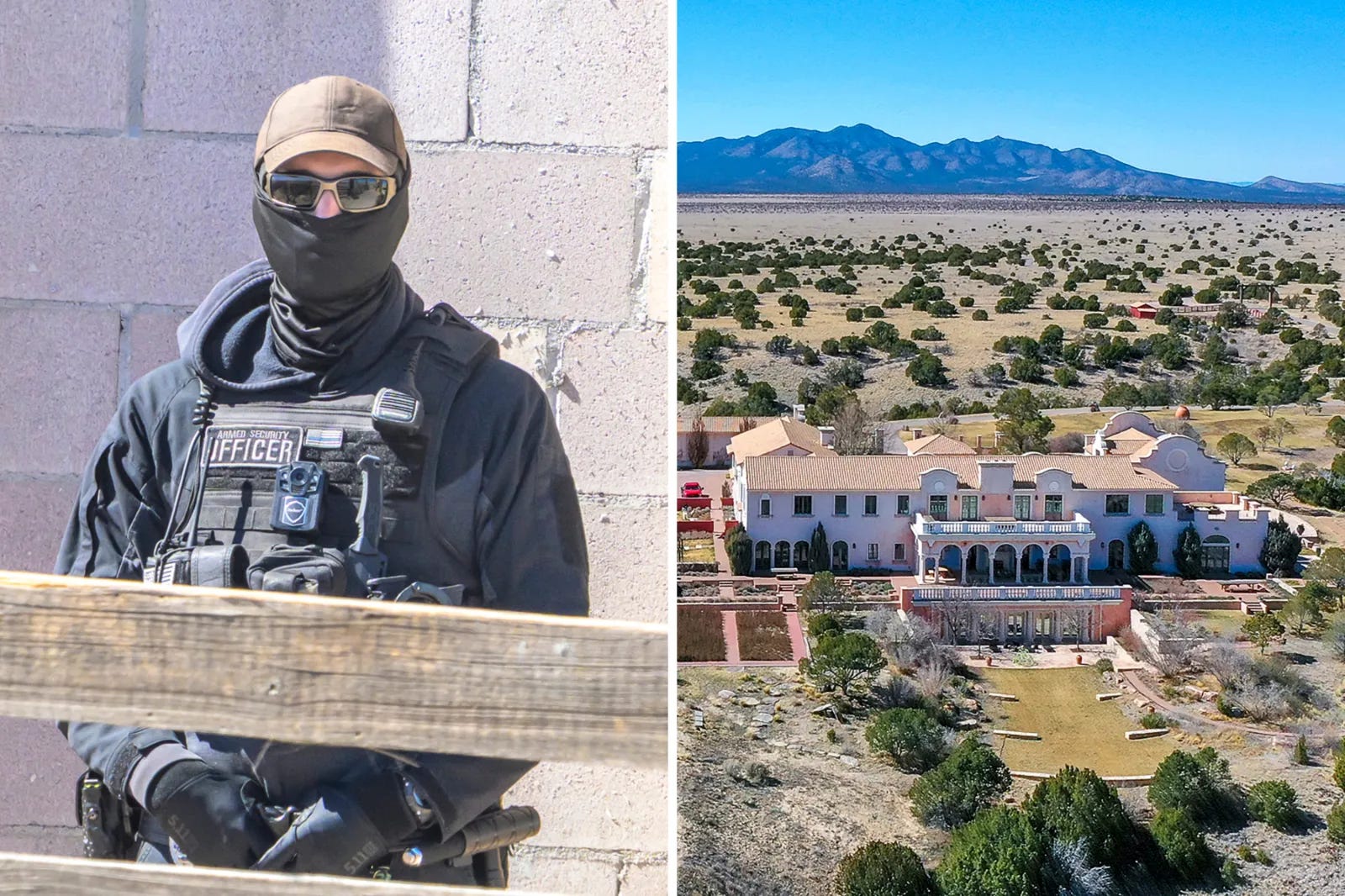
Like many of you, I’ve been reading Alisa Valdes-Rodríguez’s reporting on Zorro Ranch at The Pugilist. On April 18, she described what a thorough search of the property would look like. In her words, “a thorough search of 7,500 acres of rough New Mexico terrain, with multiple structures and outbuildings, requires not days but weeks. It requires ground-penetrating radar. It requires excavation where dogs alert. One alert, one dig.” Seventy-five hundred acres is roughly the size of Manhattan below 59th Street. The March 9 search lasted hours. Investigators didn’t bring ground-penetrating radar onto the property, they didn’t excavate where dogs alerted, and they never set foot on the state-owned land surrounding the ranch, the adjacent King family ranch, or San Cristobal Ranch on the other side of the fence. The owners let them in voluntarily, which is called a consent search, and it ended when the owners decided it ended.
The survivors are owed more than the search that occurred. Annie Farmer testified at the Maxwell trial that Epstein and Maxwell abused her at Zorro Ranch when she was sixteen. Rachel Benavidez, a former Santa Fe massage therapist, has spoken publicly about being assaulted there over approximately two years. Maria Farmer reported abuse to the FBI in 1996. Virginia Giuffre testified she was trafficked there and ordered to have sex with Epstein and other men. The Solace Crisis Treatment Center in Santa Fe has reported that approximately forty-five individuals approached the center about Epstein-ring trafficking, with a quarter to half saying they were abused at the ranch. The federal Department of Justice has declined further Epstein prosecutions. Epstein’s friends run the DOJ, the FBI, the GOP, and the Supreme Court. States are the option that’s left. New Mexico has a pivotal case. Unfortunately, evidence degrades, witnesses die or disappear, statutes of limitation tick, victims reasonably decide they would rather not relive the trauma, and the Huffines family could sell the property again. The political moment for a state action like this is now.
I’ve been turning the question over since I read it. How do you get a full scale search of Zorro Ranch to happen, using the institutions that exist, in the political moment we’re in?
The answer isn’t necessarily the Attorney General. Attorney General Raúl Torrez reopened the investigation in February after his predecessor closed it in 2019 at the request of federal prosecutors handling the Epstein criminal case under the first Trump administration. NMDOJ has roughly two hundred employees across the entire office, and they’re mostly lawyers. The AG’s office doesn’t have dedicated cadaver-dog teams, ground-penetrating radar in-house, or forensic accountants assigned full-time to trace shell companies through Deutsche Bank, JPMorgan, Southern Trust, the Zorro Trust, and the Caribbean entities Epstein and his estate moved money through. The Attorney General could have asked the Governor for State Police investigators, forensic capacity through the Department of Public Safety, National Guard logistical support, or coordination from the State Land Office. To public knowledge, he hasn’t. The Truth Commission the Legislature created has two million dollars, eighteen months, subpoena power, and no investigative resources of its own. Neither has what the standard requires.
Who has both the investigative and administrative resources to do all of this? The Governor.
Governor Michelle Lujan Grisham is in her final year in office. She has the authority to sign an executive order, which is a written directive that mobilizes the state agencies that report to her. She’s used this kind of order before. On September 8, 2023, she signed one declaring a public-safety emergency in Albuquerque and directing the State Police, the Department of Public Safety, and the Department of Health to respond to gun violence. The order was controversial, and parts of it didn’t survive in court, but the structural move stands. She knows how to use this tool and she is willing to take a bold action and let the courts sort it out. That behavior is worthy of celebrating when it comes from conviction and sincere concern for the public, as her executive order on gun violence was. I’m not a New Mexico resident and I’m sure there are people there who have issues with their Governor, but I have to say that exploring her record makes her seem like someone with a conscience.
She’s also said the right words on this case. On February 19, when the Attorney General reopened the Zorro investigation, she said, “We don’t care who you are here. If you did something and you’re associated in these Epstein cases, and you perpetrated a crime, and there are still victims, there are potentially deaths and bodies, we will find it.” That was a commitment. What’s missing is the executive order that turns the commitment into operational capacity.
That executive order can do five things in sequence, and none of them require the Attorney General’s permission or interfere with his investigation.
First, search the state-owned land. The land surrounding Zorro Ranch is leased to Epstein’s estate but owned by New Mexico. Land Commissioner Stephanie Garcia Richard has publicly called for investigation of the state trust land surrounding the ranch, saying authorities must “leave no stone unturned in finding answers.” The Governor’s order can direct the State Police, the Department of Public Safety, and the National Guard to conduct a thorough search of that land, with ground-penetrating radar and cadaver dogs. The state owns it, no warrant is required, and this work can begin immediately.
Second, work the documents. Forensic accountants and investigators can move through what’s already in NMDOJ’s possession from the Deutsche Bank settlement, the JPMorgan settlement, and the federal files. The Bradbury Stamm Construction question. The FCC microwave licenses still active under Zorro Development Corp. The Zorro Trust. The 2008 Powerball claim by Epstein’s New Mexico business. The 1993 Power of Attorney that former U.S. Attorney John J. Kelly held for Epstein on the original Zorro purchase. None of this requires a search warrant on private property. All of it can develop the kind of evidence that justifies what comes next.
Third, interview witnesses. State Police investigators detailed under the Governor’s order can support NMDOJ on witness work. Brice and Karen Gordon, the former ranch managers. Former Zorro staff. Survivors who’ve approached Solace but haven’t formally testified. Witness testimony, taken under subpoena and grand jury authority that NMDOJ already has, is the most reliable way to develop what the law calls probable cause, which is the specific evidence a judge requires before signing a search warrant for private property.
Fourth, when probable cause develops, search the property again with a warrant. The March 9 search ended because the owners ended it. A second search of the main ranch property requires either renewed permission from the owners, which is unlikely given how their attorney framed the first search, or a warrant supported by probable cause. The work in the first three steps produces that probable cause. The Attorney General said in his March 7 op-ed that “physical evidence may no longer exist.” With the resources mobilized by the Governor’s order in place, the equipment, the dogs, the forensic teams, and the personnel are ready to act the same week the warrant is signed, not six months later.
Fifth, build the same case for the adjacent properties. A search of the King family ranch or San Cristobal Ranch requires probable cause specific to those properties. That probable cause doesn’t exist today. It might develop from the document work and the witness work, especially the financial relationships and the communications infrastructure Valdes-Rodríguez has been documenting. If it develops, the resources are in place to act.
The path builds the case the law requires before the searches the case demands. It begins with the work that doesn’t require warrants and ends with searches that have the predicate to survive any defense lawyer the Huffines family hires.
What the Governor’s order would actually stand up is a dedicated task force inside NMDOJ, staffed with forensic accountants, investigators, and prosecutors detailed from State Police and other state agencies. The task force can issue grand jury subpoenas for records, take depositions from witnesses and co-conspirators named in the files, and present evidence to a grand jury when the case is ready for indictment. None of this is exotic. It is what state attorneys general do every day on complex financial and trafficking cases. The Governor’s order gives the office the staffing and the agency cooperation to do it at the scale this case requires.
The work each step produces matters as much as the order in which it happens. The 2019 anonymous tip in federal files alleged that two foreign girls were buried in the hills around the ranch. Cadaver dogs and ground-penetrating radar are the tools that find buried remains, and if remains are found, the case moves from a trafficking investigation to a homicide investigation, which has no statute of limitations. The document work can identify the people who moved money through the Zorro Trust, Southern Trust, and the Caribbean entities, which means names of co-conspirators who paid, recruited, facilitated, or participated. The witness work can produce sworn testimony from people who’ve never been compelled to give it. Together, these unlock state charges that can’t be undone by federal action, a public record that survives whatever the federal government chooses to do or not do, civil exposure for the banks, contractors, and infrastructure providers that made the operation possible, and pressure on every other state where Epstein operated to follow what New Mexico surfaces.
The precedent for this kind of executive order is established and bipartisan. In Massachusetts, Governor Charlie Baker signed an executive order in April 2015 creating a Council on Sexual Assault and Domestic Violence and used administrative authority to stand up a Human Trafficking Unit inside the Massachusetts State Police. In New Hampshire, Governor Chris Sununu signed an executive order in 2020 creating a Commission on Law Enforcement Accountability. Connecticut has run a Governor’s Task Force on Justice for Abused Children continuously since 1988, established by gubernatorial action and operating through multidisciplinary investigative teams ever since. In Texas, Governor Greg Abbott built a Child Sex Trafficking Team inside the Office of the Governor with statewide investigative coordination authority. The mechanism is the same in every case. A governor uses her authority to build investigative coordination that supplements existing prosecutorial authority without taking it over. Governor Lujan Grisham wouldn’t be inventing anything. She’d be doing what other governors have done, in a state that needs it, on a case the federal government has formally declined to pursue.
The political reality is straightforward. The Attorney General can’t publicly oppose the Governor supplying him with State Police investigators, forensic capacity, and cooperation from the State Land Office on a child sex trafficking case. The Truth Commission can’t oppose more capacity feeding its referrals. The survivor coalition chanted “Raúl Torrez, get us justice” at the International Women’s Day rally outside the ranch, and Rachel Benavidez has called publicly for accountability. Land Commissioner Garcia Richard has asked for a full investigation. The federal congressional delegation, including Senator Martin Heinrich and Representatives Melanie Stansbury and Teresa Leger Fernández, is aligned on Epstein accountability and would welcome the move. There’s no constituency for refusing additional investigative resources directed at child sex trafficking on the property where Annie Farmer testified she was abused at sixteen, where Maria Farmer reported abuse to the FBI in 1996, where Virginia Giuffre testified she was trafficked, and where Rachel Benavidez has spoken publicly about being assaulted over approximately two years.
This is what Tier 3 of the American Reformation framework looks like in practice: oppositional federalism, state prosecution of conduct the federal system is actively covering up. I can’t imagine something more “originalist” and true to our founders’ vision than states using their constitutionally authorized and lawful powers to investigate and enforce the law when the federal government has been captured. They intended for a system with safeguards beyond the bicameral legislature or three branches of government. We have checks and balances from the personal, local, city, state, and even tribal government levels to influence our nation towards freedom and justice.
The Governor has the authority to build the path that gets New Mexico’s investigation up and running to the degree it merits. She has the legal tools, the political circumstances, and the public commitment on the record. What she needs is for the public and her coalition to ask her to use them.
And maybe, she is just waiting to hear the right idea, and know that she has the support of America as she stands for freedom under siege.
Related: Epstein files reporting and calls to action from The Existentialist Republic
Join the discussion on r/ExistentialRepublic