This article was first published May 12, 2026, on Medium and in The Existentialist Republic.
Helen Messer found out a few weeks before the vote, when a developer announced plans to drop a 350,000-square-foot data center onto a 22-acre lot in Chesapeake, Virginia, a couple of hundred feet from her back yard on the other side of a small retention pond. The project would have been the first major data center in Hampton Roads, and Messer and her neighbors did not have a lobbyist, but they had each other and a church social hall where they met to organize within days of learning about the proposal.
They turned up at the planning commission, which voted six to one against the project after hearing nearly fifty residents testify against it, and then they turned up again at the city council, where the vote was seven to zero to reject the rezoning on June 17, 2025.
When the board lit up showing the unanimous vote, the chamber erupted, and Messer walked out and told a reporter she would sleep better than she had in a month. The model works, and this article explains how to do it where you live.
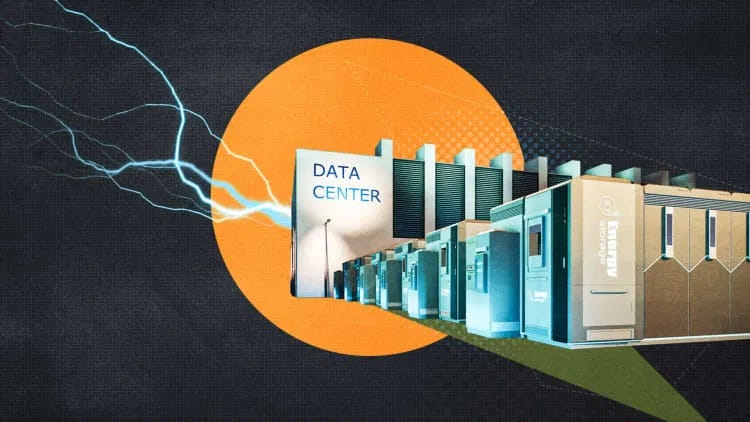
A data center is a warehouse full of computers that swallows millions of gallons of fresh water a day, burns through electricity at the rate of a mid-sized city, and dumps the heat, the noise, and the diesel exhaust onto whatever neighborhood happens to sit next door.
One facility can consume up to five million gallons of water every day, pulled straight from the same drinking water reservoirs that serve the surrounding towns, in a country where the Colorado River is running dry and entire counties are rationing what comes out of the tap.
The power demand is worse, because data centers are now the single fastest-growing source of new electricity consumption in the United States, and most of that electricity still comes from coal and natural gas, which means every new facility is a new commitment to burning fossil fuels for decades.
Diesel backup generators sit on site and run on the worst days, throwing particulate matter into the air that nearby residents breathe, pollution that the medical literature ties to heart disease, lung disease, and cancer. Cooling systems run twenty-four hours a day, and one Loudoun County resident measured the noise at 70 decibels on his front porch, equivalent to a vacuum cleaner that never turns off.
Julie Bolthouse at the Piedmont Environmental Council, who has spent years studying these facilities and the harms they generate, put it plainly when a Winchester resident asked her what setback distance would protect a home: “Based on everything I’ve seen from data centers, what I’ve continued to reckon is that they shouldn’t be next to homes at all.”
All of this is so a handful of companies can sell AI services that, by the admission of the people building them, may never turn a profit.
This is happening right now in Loudoun County, Virginia, in rural Georgia, in the suburbs of Phoenix, and in dozens of other places where the land is cheap, the power is available, and the local tax base is hungry enough to wave through a project before residents find out it exists. If your community has those three ingredients, you are on the industry’s list.
Other countries have already done the math and pulled the emergency brake. Ireland imposed a de facto moratorium on new data center connections around Dublin in 2022, after the industry’s electricity consumption hit 22 percent of the country’s total, more than every home in Ireland combined, and the Netherlands restricted hyperscale data centers to a small number of designated sites in the far north of the country, while Singapore banned new data centers outright in 2019 and only began permitting them again under strict efficiency rules.
The argument the industry makes against a ban, that it is too radical, falls apart the moment you look at the rest of the world, where entire national governments have looked at the same harms and said no.
The legal authority to zone, permit, and ban industrial development belongs to your city council and your state legislature, which means a small group of organized neighbors can shut the door before it opens.
The numbers back that up, because Data Center Watch, a research project run by the AI intelligence firm 10aLabs, found that sixteen data center projects were delayed or outright rejected nationally between May 2024 and March 2025, almost entirely because residents organized and showed up.
The data center buildout is already happening, and the companies financing these facilities will not stop on their own, and the federal government is not going to protect our water, our air, or our climate.
The fight runs through city hall and the statehouse, because that is where the authority to zone, permit, and ban industrial development actually sits, and we use that authority, or we lose this fight by default.
Join the discussion on r/ExistentialRepublic