
This article was first published July 20, 2026, on Medium and in The Existentialist Republic.
The Epstein Survivors Justice Act
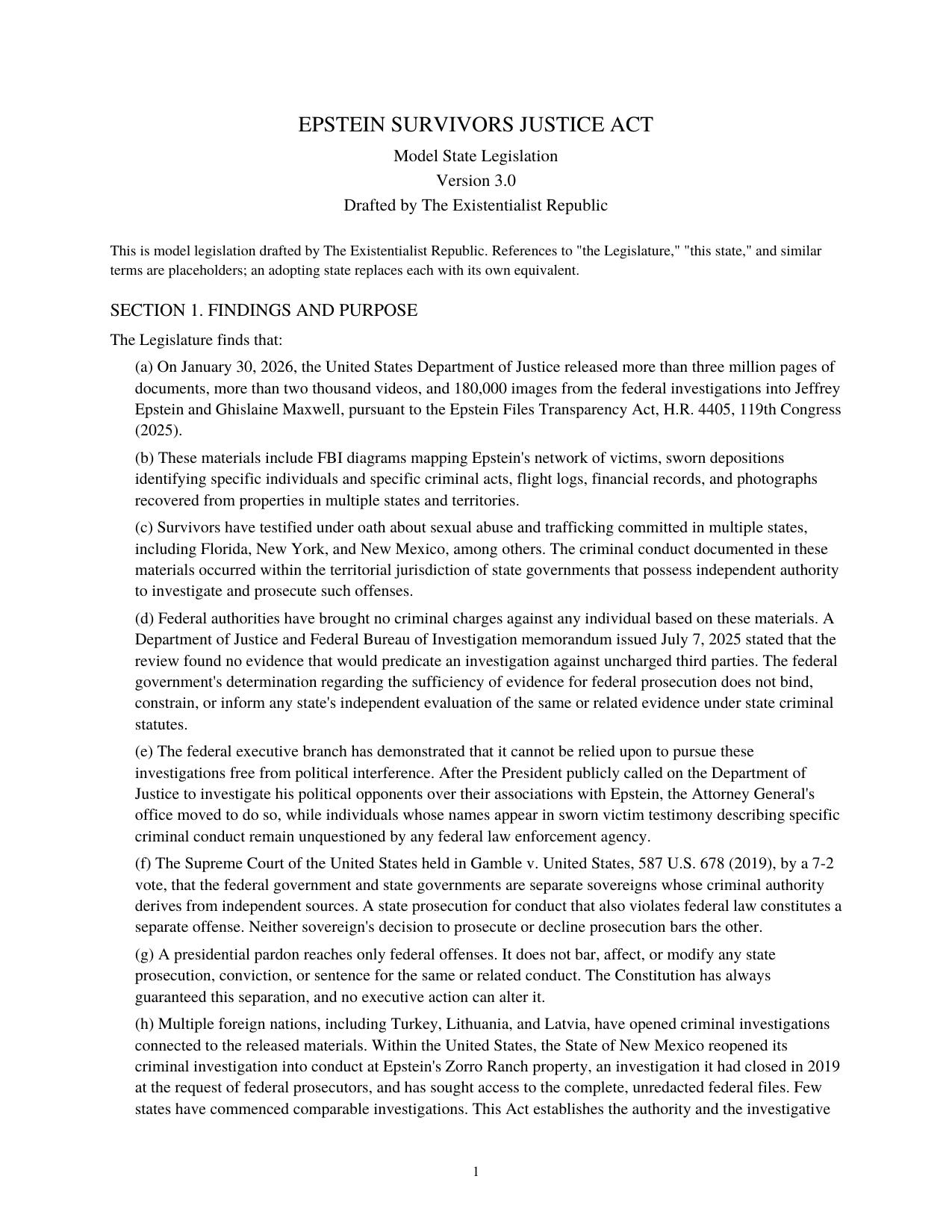
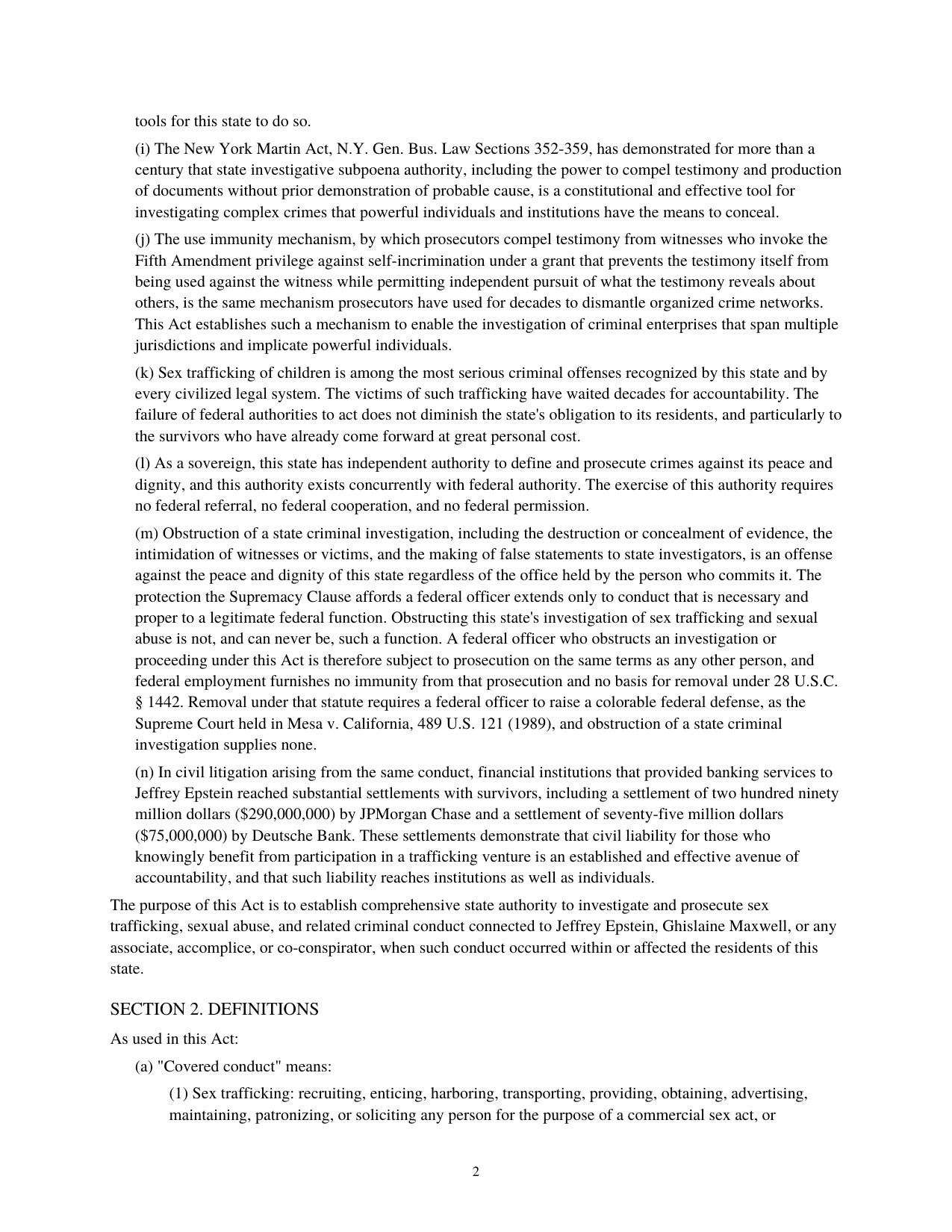
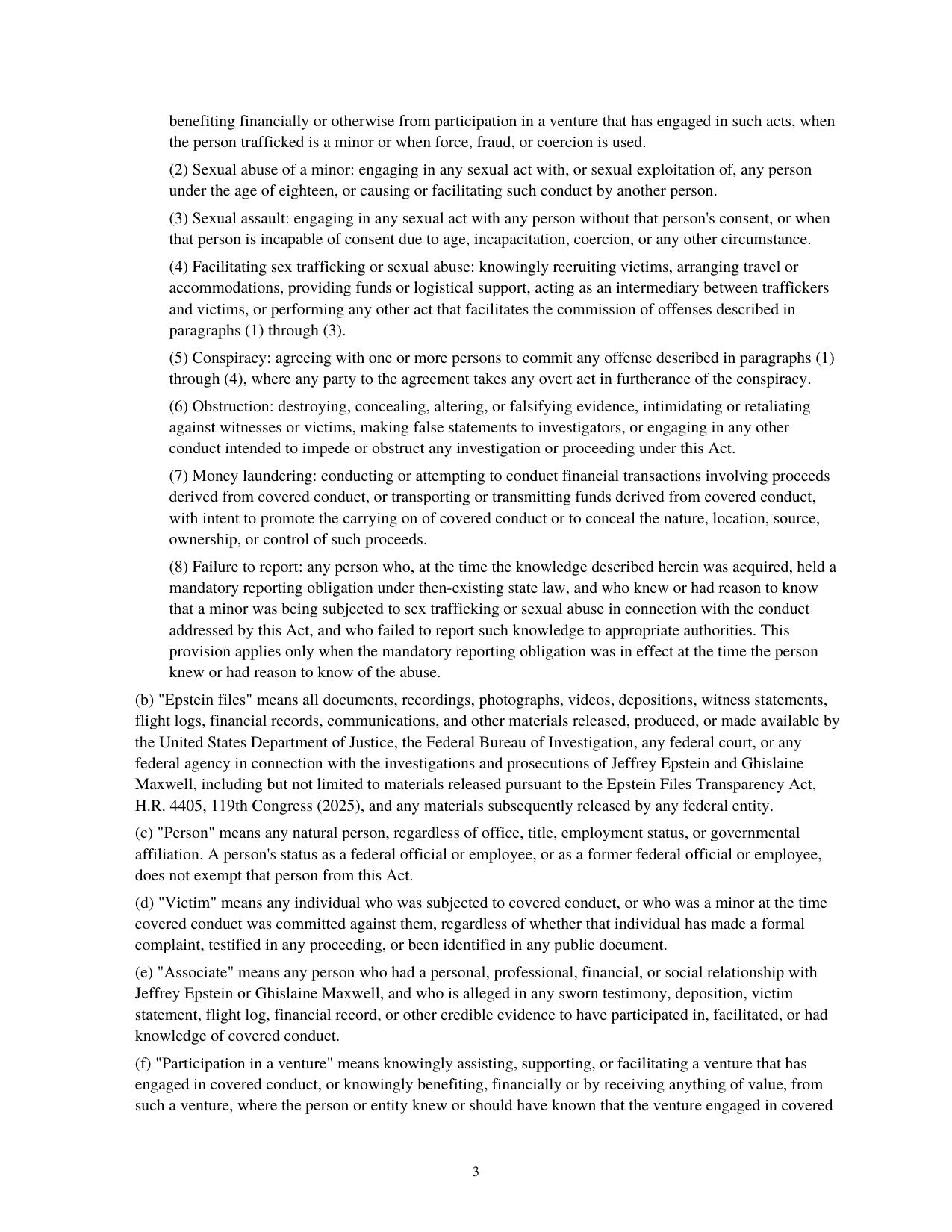
This is version 3.0 of the bill, previously published as the Child Sex Trafficking Investigation and Accountability Act, revised and strengthened for this release. Everything that follows is built from existing and long standing legal precedent.
The primary provisions of the Act, in plain terms:
-
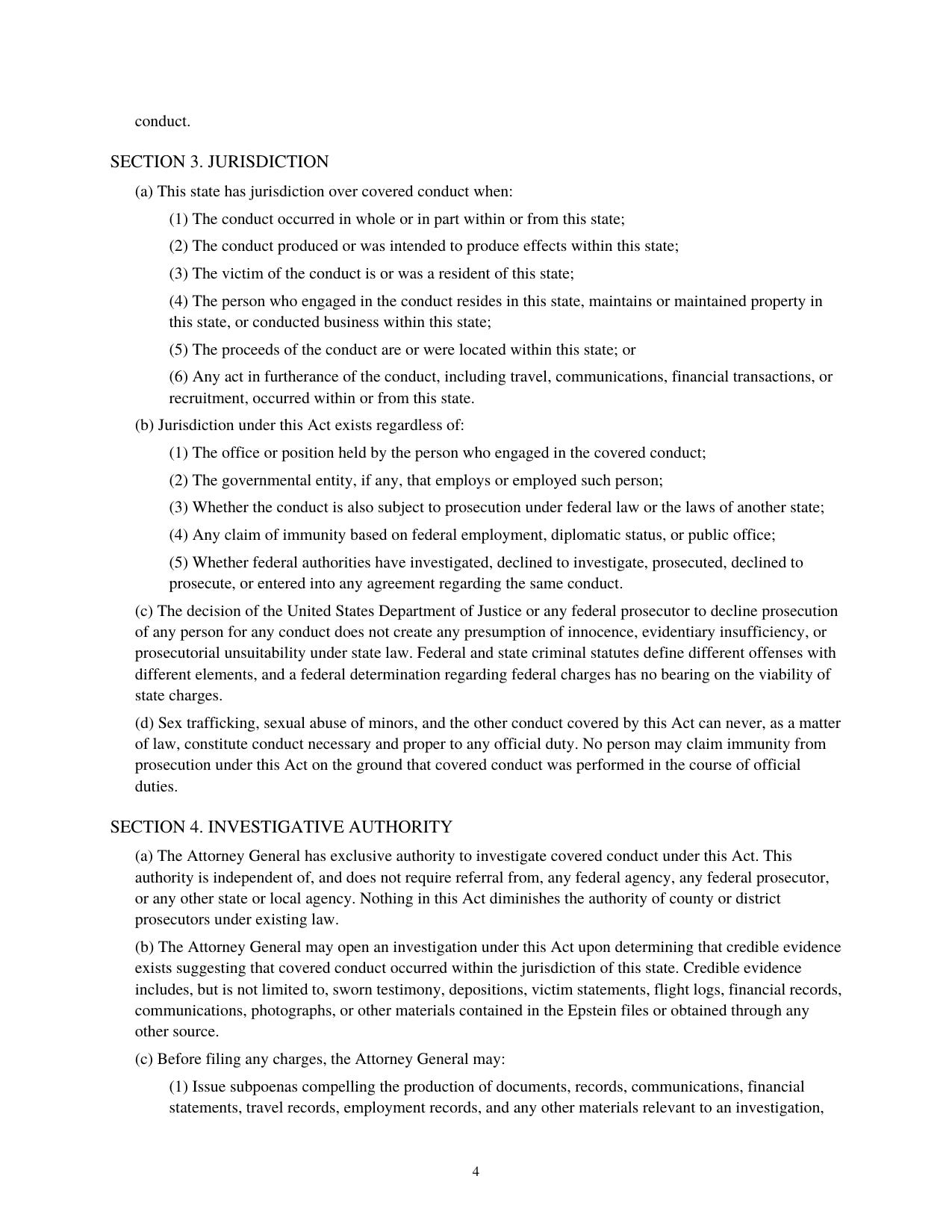
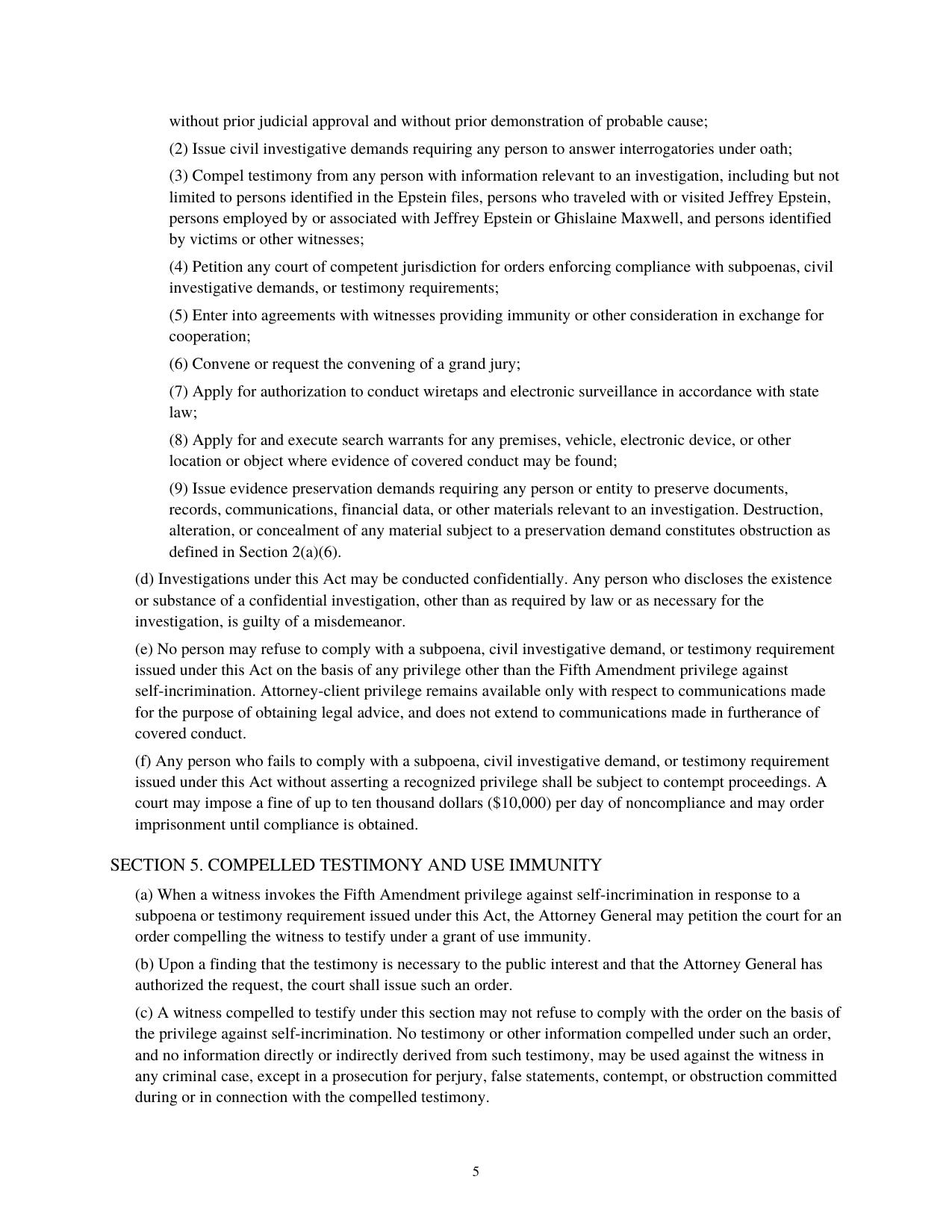
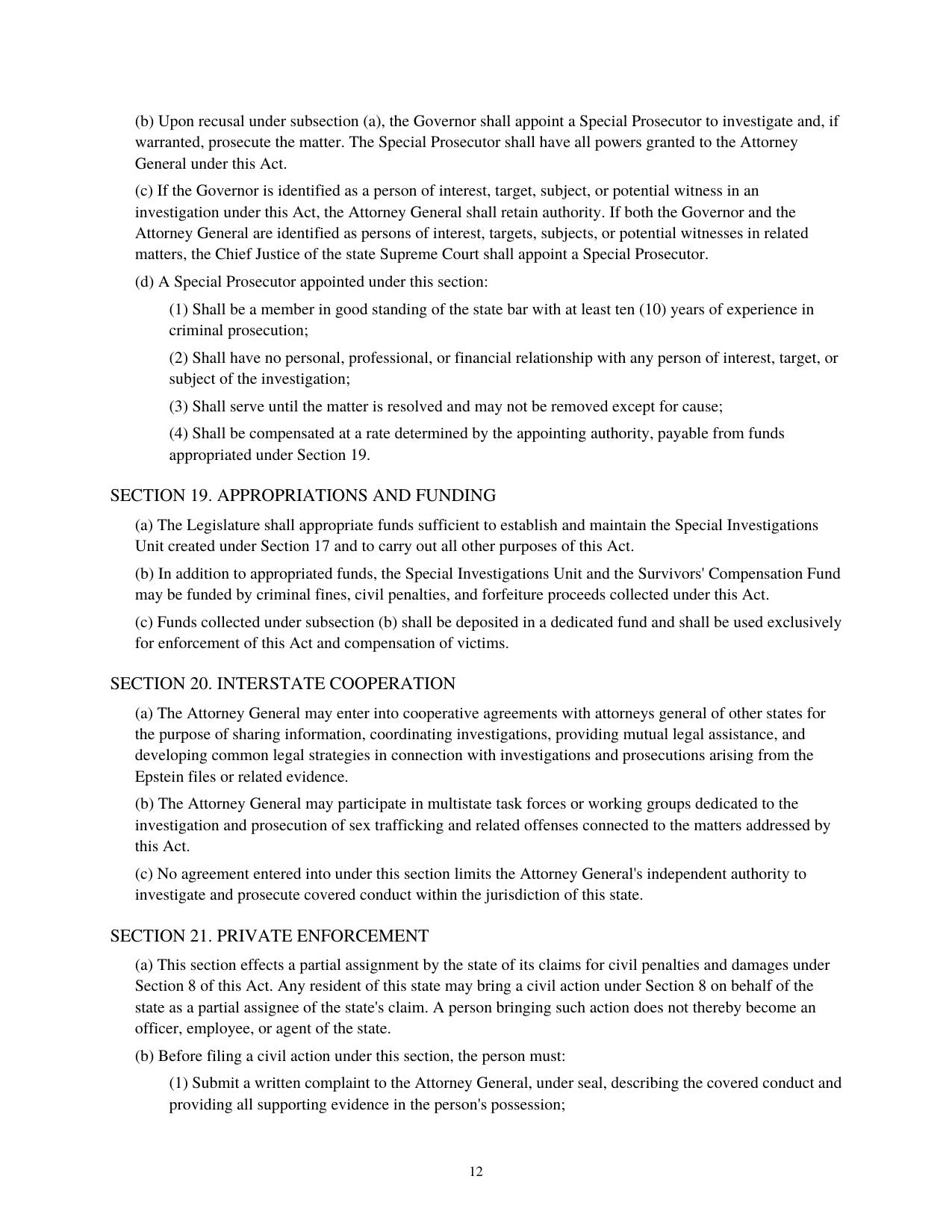
State attorneys general get Martin Act-style subpoena power: they can compel documents and testimony before any charges are filed, with no probable cause showing required.
-
Use immunity lets prosecutors compel testimony from witnesses invoking the Fifth Amendment, the same mechanism that dismantled organized crime networks.
-
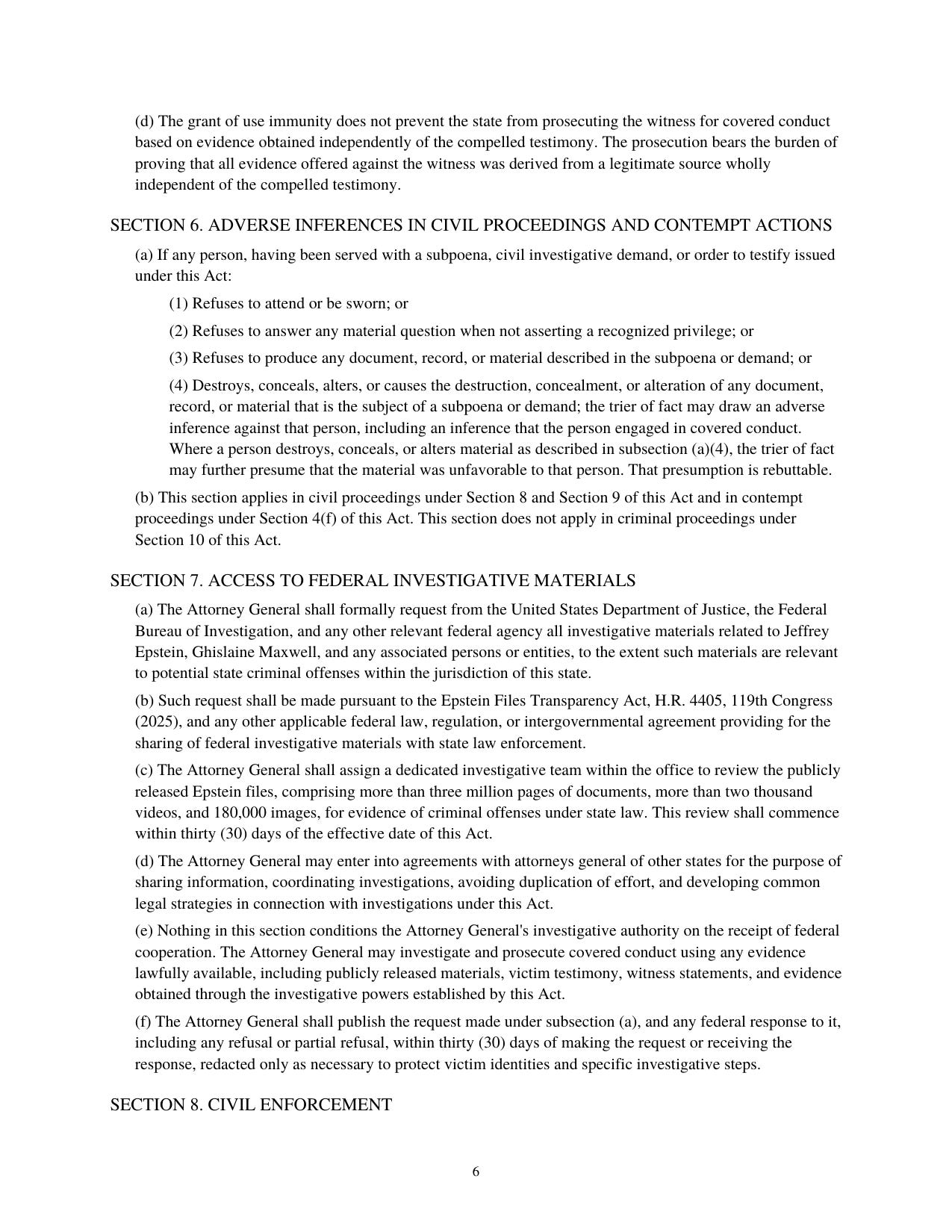
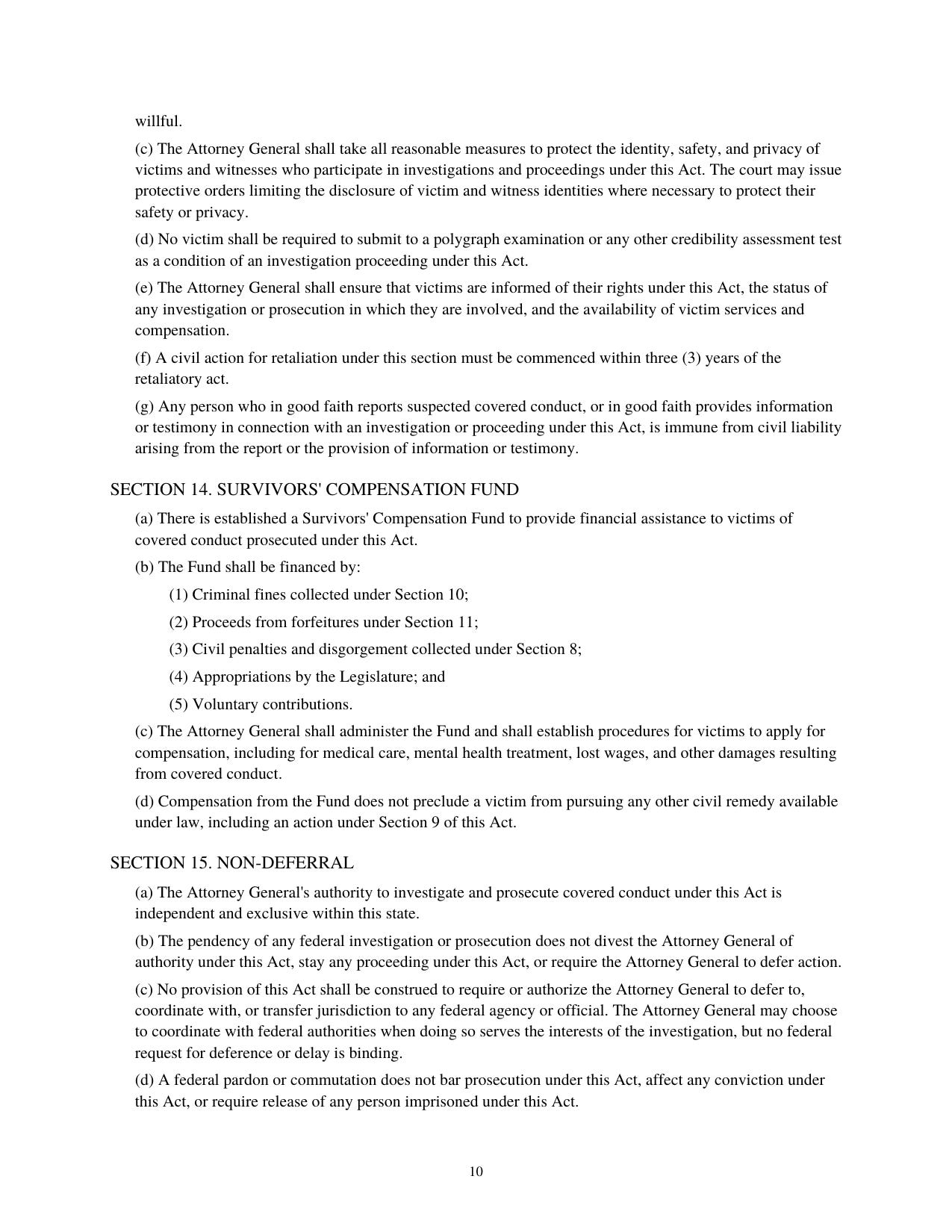
No federal referral, cooperation, or approval is required, and a federal decision not to charge means nothing under state law.
-
A presidential pardon reaches federal offenses only and has no effect on a state prosecution.
-
Federal agents who obstruct the investigation can be prosecuted, and federal employment provides no immunity for openly criminal obstruction of justice.
-
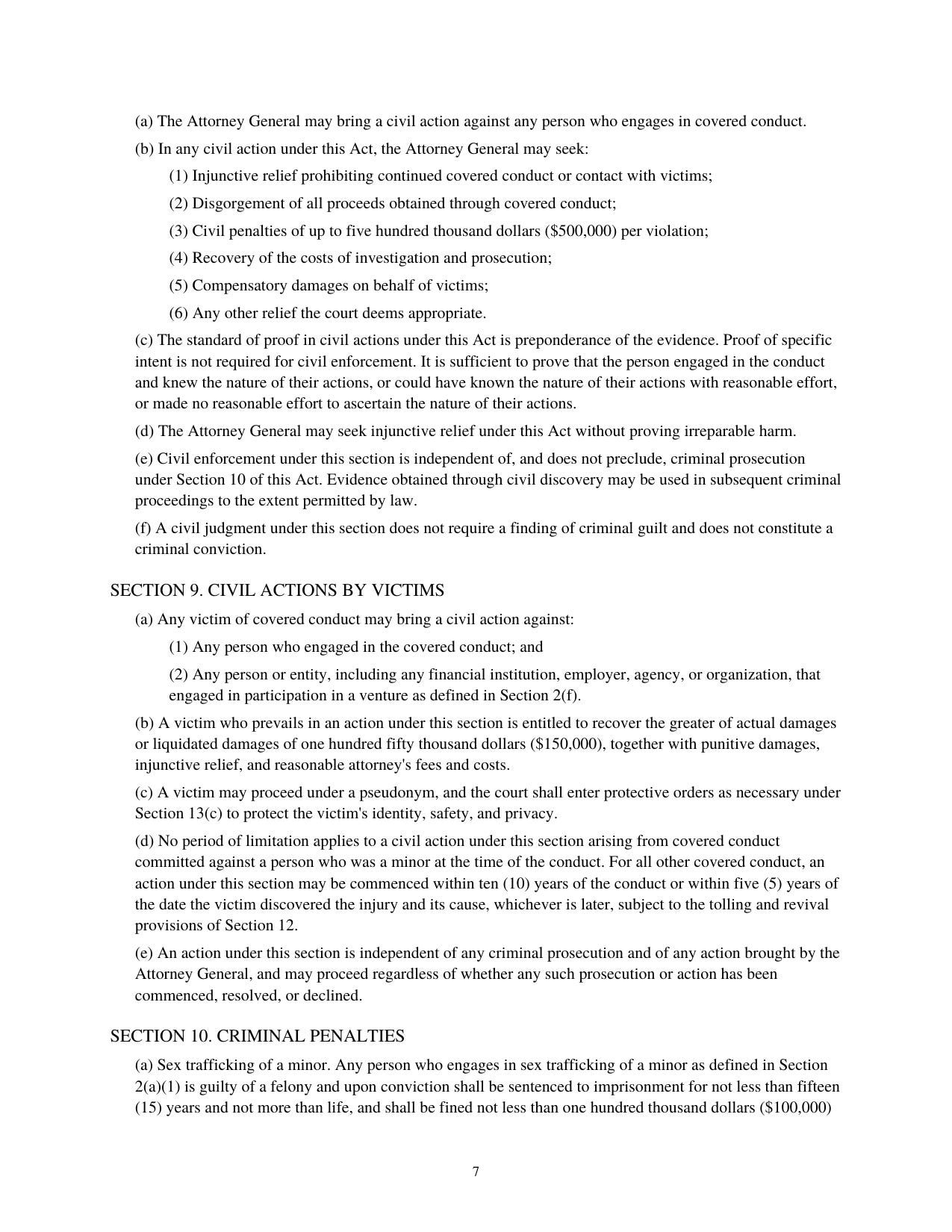
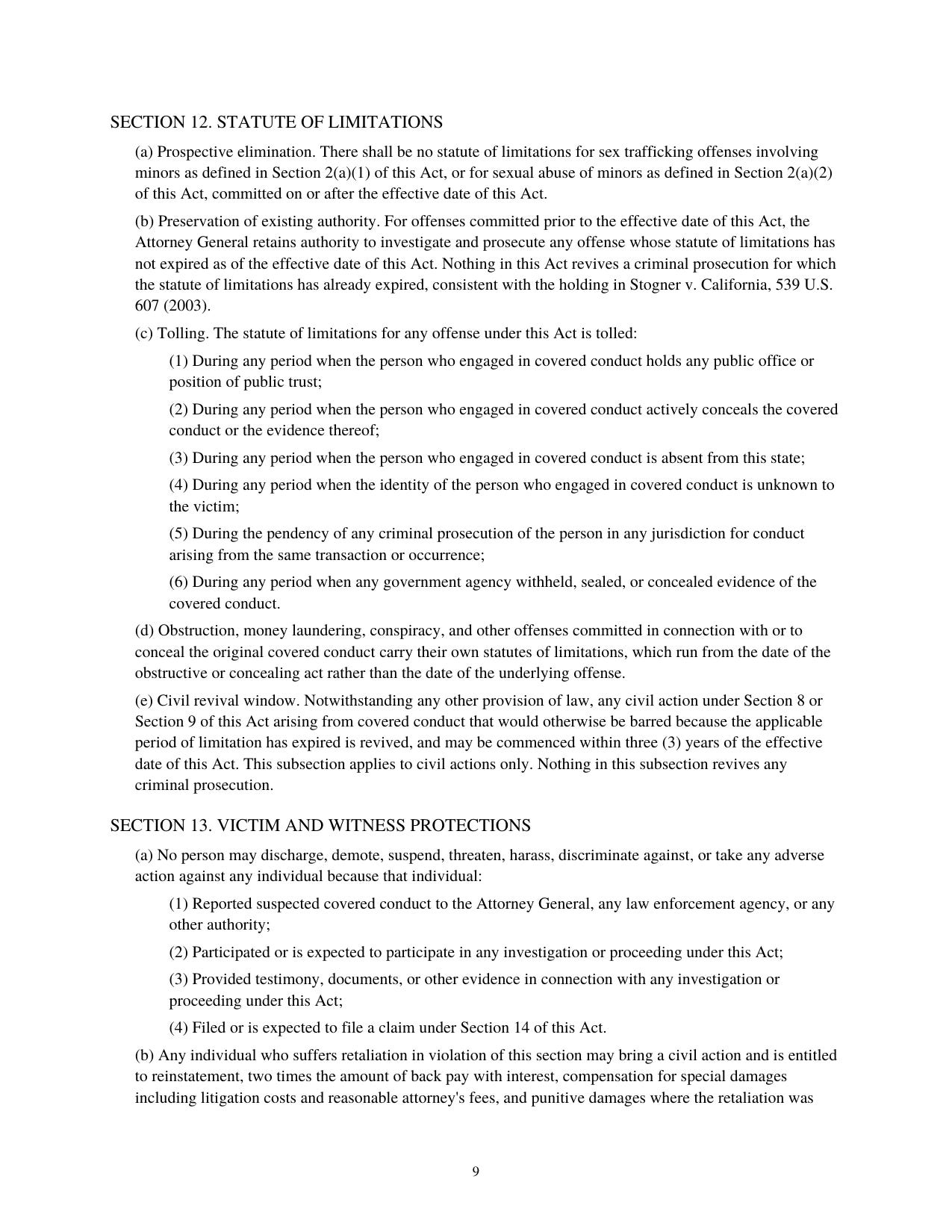
There is no statute of limitations going forward for child sex trafficking, and the limitations period is paused while a perpetrator conceals evidence or occupies public office.
-
New in 3.0: a three-year revival window reopens civil cases that courts previously dismissed as too old.
-
New in 3.0: survivors can sue anyone who knowingly profited from the operation, including financial institutions, not just the abusers themselves.
-
New in 3.0: the attorney general can order records preserved from the day the law passes, and destroying them afterward is a felony.
-
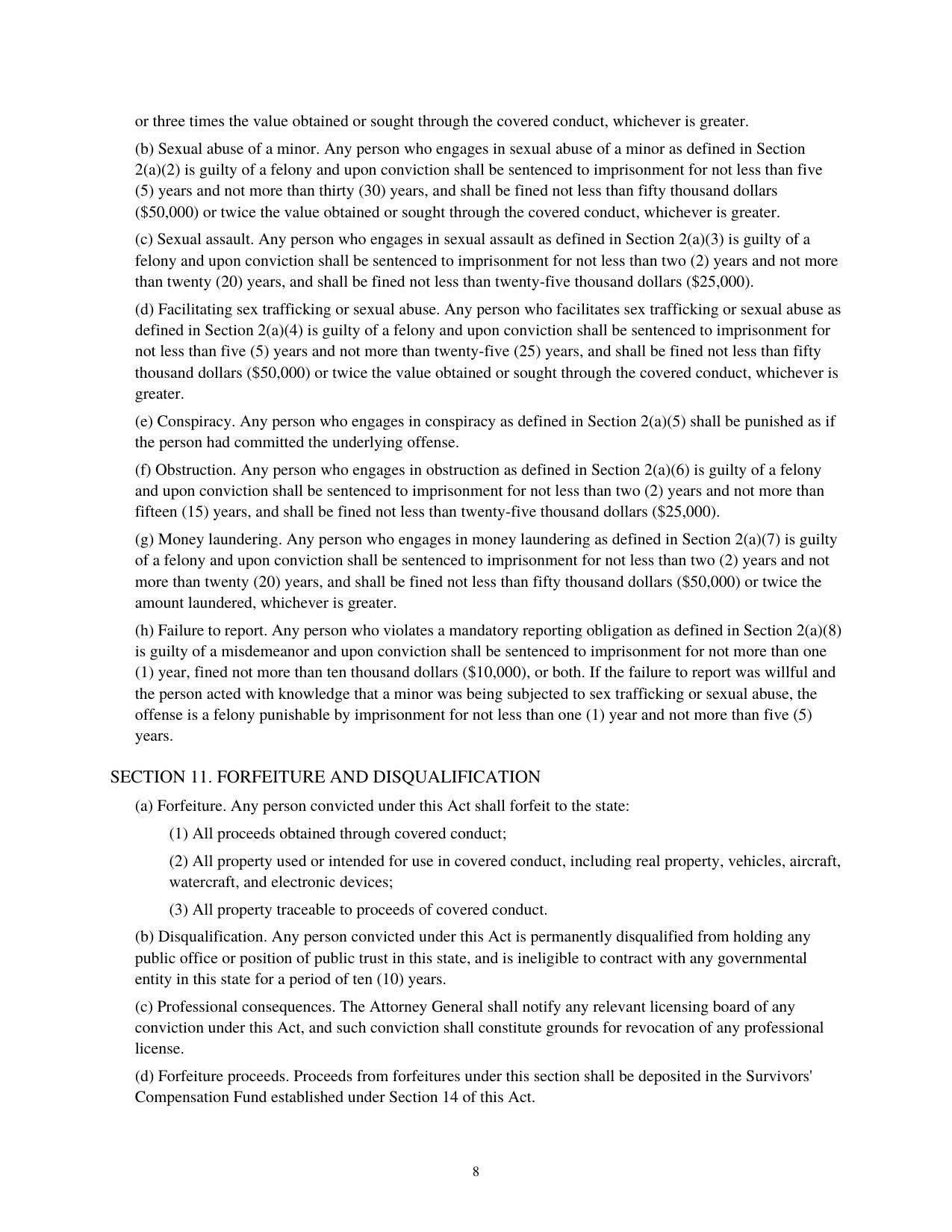
Fines and forfeitures from convictions finance a Survivors’ Compensation Fund, so the perpetrators pay for the recovery.
-
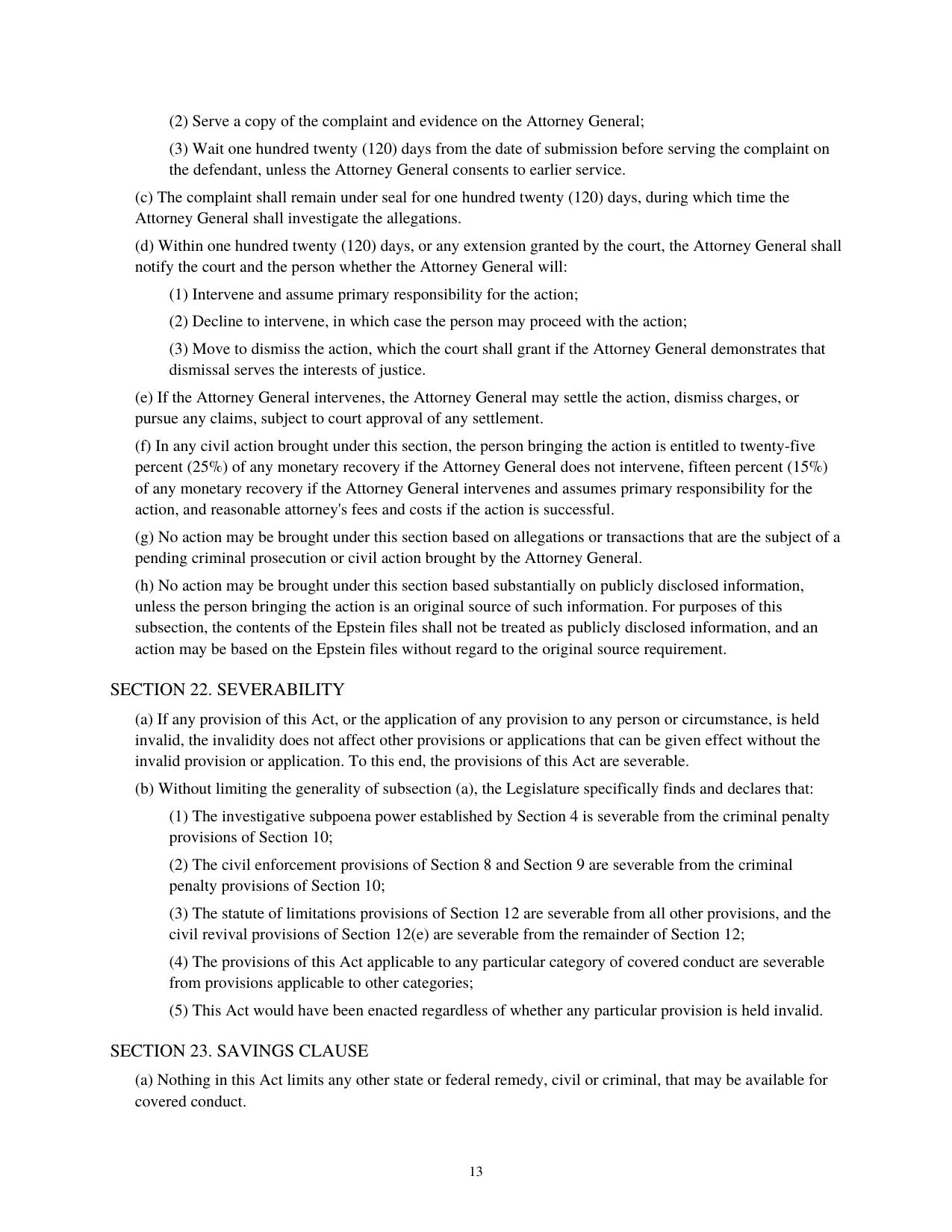
If the attorney general refuses to act, any resident can bring the civil case for the state and keep up to twenty-five percent of the recovery.
-
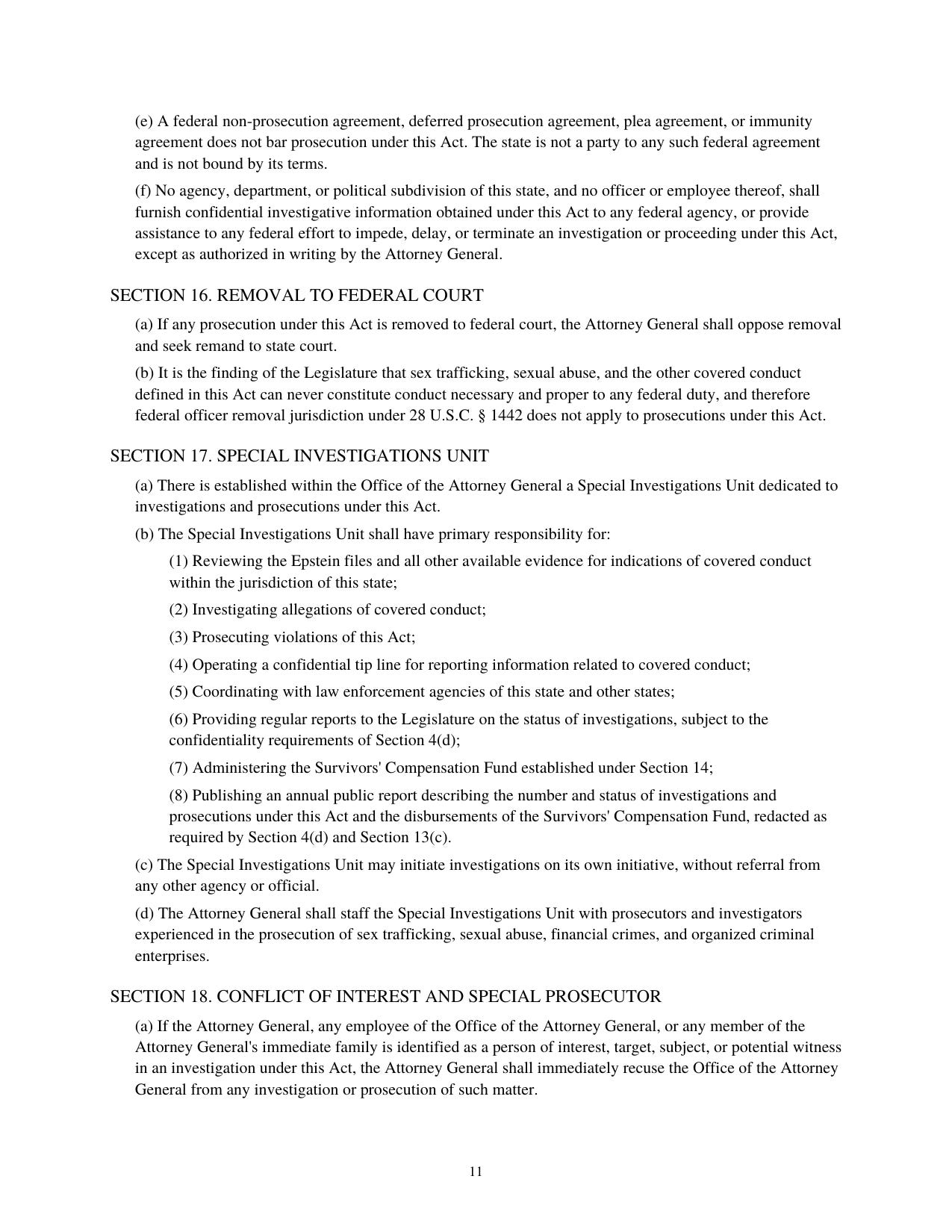
If the attorney general or the governor is implicated, a special prosecutor is appointed, and anyone convicted is permanently barred from public office in the state.
The complete text of version 3.0 can be found at the bottom of this article.
The Department of Justice released more than three million pages of Epstein files on January 30. In the months since, federal prosecutors have brought no new charges against anyone in Epstein’s network, and reporting has documented records being withheld and removed from public view.
The fight is far from over, and the options that remain are at the state level.
Part of what you can do about any of this is understanding what these officials and organizations can do.
Your governor can declare a state of emergency over the Epstein files, and the precedent for that is broad. Governors have declared emergencies over the opioid epidemic in at least eight states, over a measles outbreak in Washington, over gun violence in New Mexico, over homelessness in Oregon, over ransomware attacks on Louisiana school districts, and routinely over hurricanes, wildfires, and floods.
When New Mexico’s declaration was challenged, the state supreme court upheld it.
Your governor can also skip the emergency declaration and order an investigation directly. The law enforcement agencies of the state are under the governor in the executive branch, and a governor can direct them to investigate the public side of the Epstein files, the released records and what is already known: bring people in, pursue subpoenas, convene grand juries, take depositions, and find where the evidence intersects with the criminal law of the state.
Where it intersects the law of another state, send it to that state. Where something should be publicly disclosed, disclose it.
And where federal agents obstruct the investigation, refuse to cooperate with it, or work to cover things up, charge them criminally, for perjury and for whatever else fits, up to and including the director of the FBI.
What is being asked for in both cases is legal. A state enforces its own criminal law as a separate sovereign, and no federal referral is required. This is long standing and largely undisputed legal doctrine.
Think of it this way: if Kash Patel gets pulled over and charged with a DUI while working, nobody asks if we should have the DOJ handle it. Corruption and human trafficking and many other criminal activities have been deferred by local departments for most of the last century as our federal government has consolidated powers and authorities. That practice was a matter of institutional agreement rather than written law. It’s a “may” not a “shall” that cities and states get involved. This was only appropriate when the federal government could be trusted as a neutral arbiter of the law rather than a freshly captured tool and extension of the Trump crime family. We must enter a new era of legal pursuits if we are to restore law and order in the United States; an era where government works from the bottom up, rather than top down. Thankfully, this is the vision our founders laid out and is well supported in 250 years of jurisprudence.
It is unarguably within the lawful authorities granted to a governor to convene a task force under the normal powers of law enforcement, or declare a state of emergency and unlock unilateral emergency powers, which exist because some things are tough to get done on the appropriate timeline legislatively. And in many states, your governor can also refer cases directly to the attorney general, including states where the attorney general needs a referral before pursuing criminal charges.
In most states, the attorney general can do nearly the same thing. The office has different law enforcement, investigative, and legal tools available to it, but the demand is identical: investigate the public record, see where it intersects with state law, refer what intersects another state’s laws to that state, disclose what should be publicly disclosed, and criminally charge federal agents who obstruct the work.
Readers of The Existentialist Republic have spent the past year contacting their attorneys general with asks like this, and the AGs have largely answered with form letters and non-answers.
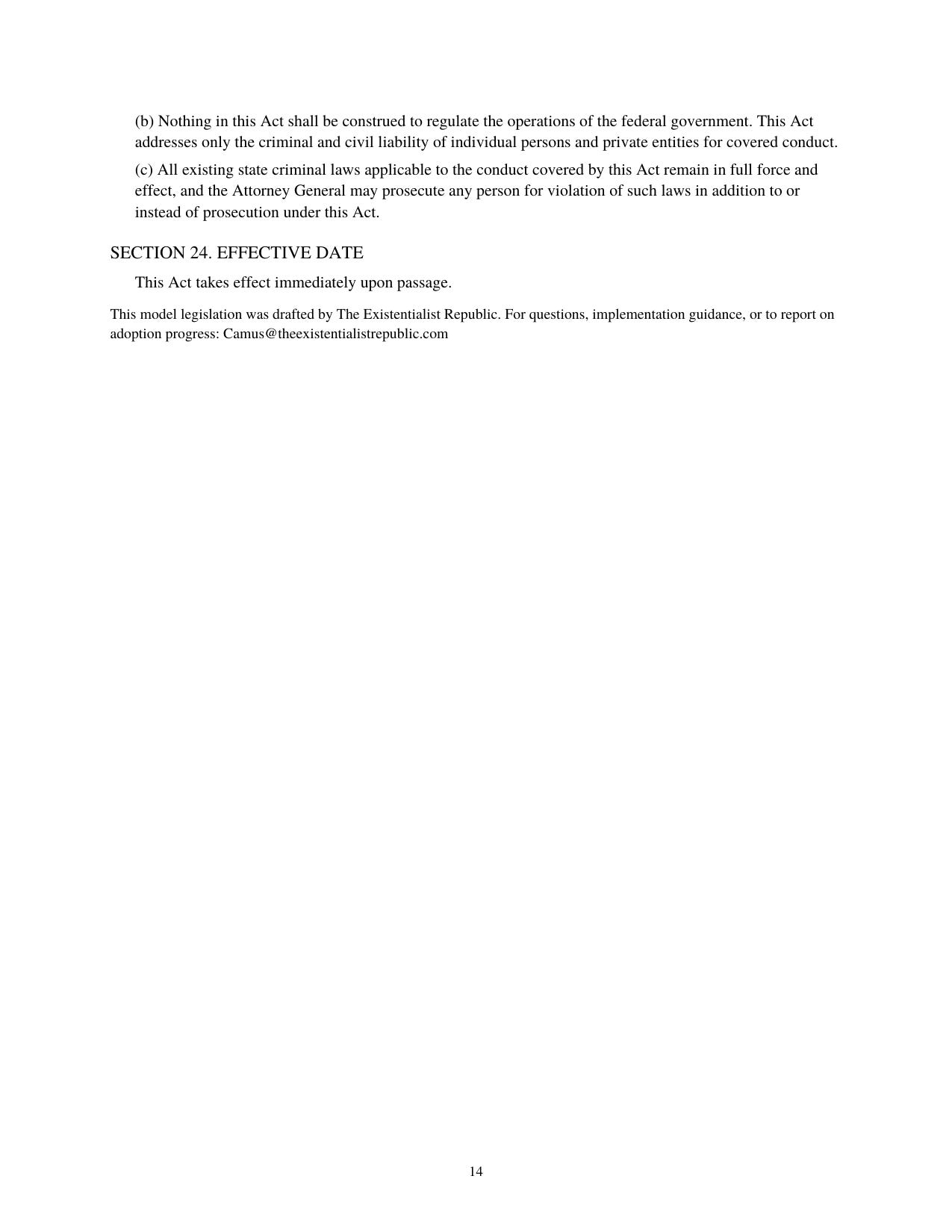
Your state legislators are the third lever. We wrote model legislation for exactly this purpose, the Epstein Survivors Justice Act. It creates the investigative task forces described above, provides for recovering funds for victims, and recoups the state’s costs from those found responsible.
Few people know the name of their Attorney General or State House Representative. You can be the reason your whole community learns it. And that AG or State Rep gets to decide how they’re known: as someone who shielded the men hiding in the Epstein files, or as someone who used every damn power they could scrape together in dogged pursuit of law and order.
Hero or villain, the choice is theirs and the spotlight will be on them either way. That spotlight can get awfully hot. If the media won’t cover it, we can put flyers on every door in town.
We don’t accept excuses. We demand justice. And we aren’t going away.
The fight over the Epstein files is far from over. In the states, it’s just beginning.
Related: Model legislation from The Existentialist Republic
Join the discussion on r/ExistentialRepublic