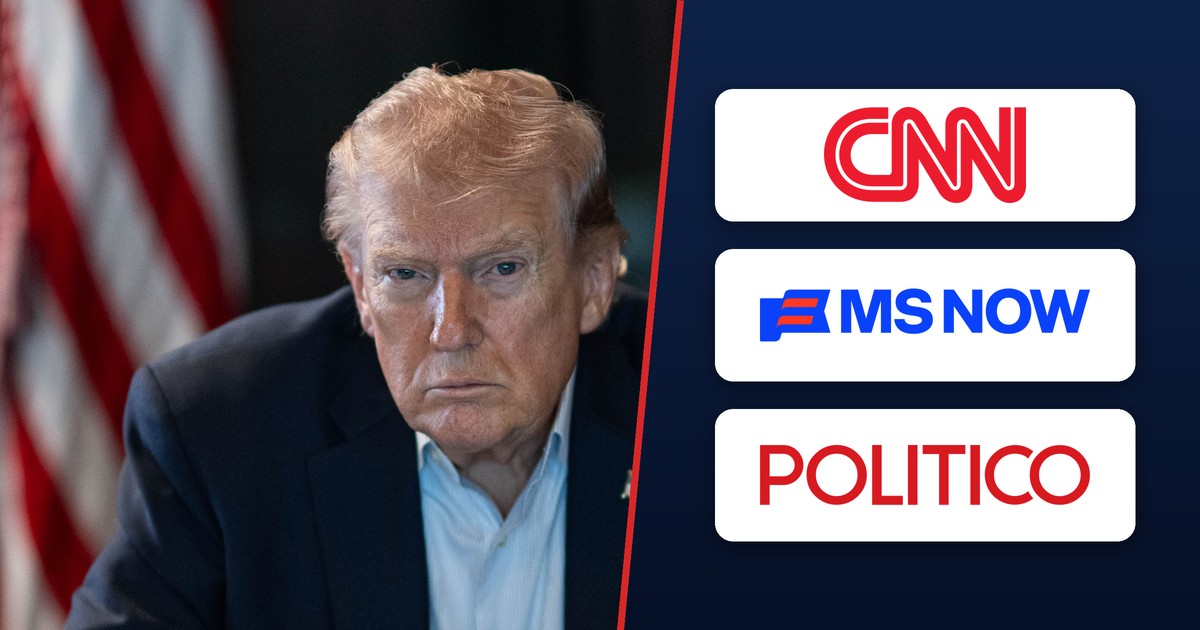
On October 13, 2026, Judge Timothy Kelly of the U.S. District Court for the District of Columbia granted the motion for a preliminary injunction brought by CNN, MS NOW and Politico. He ordered the White House to maintain the press credentials of their reporters while the lawsuit proceeds. He found the outlets “likely to succeed not only on their due process claim, but also on their two First Amendment claims.” The order extends the temporary restraining order Kelly issued on September 24, which was set to expire after 14 days.
The dispute began on September 18, when President Trump announced on Truth Social that the three outlets would be barred from the White House. The outlets sued on September 21, alleging First Amendment retaliation and Fifth Amendment due process violations. Three days later Kelly ordered the White House to “immediately return, reinstate, and restore” their access. He found the outlets likely to show that their credentials were revoked without due process. He called the administration’s “objectionable reporting” standard “so vague it hardly does the trick.” At that stage he also declined to accept the government’s argument that the outlets’ reporting endangered national security. He noted that the president’s initial announcement of the ban criticized coverage he called false and negative. It did not cite national security.
The order provides that the defendants, “except for President Trump,” “shall not execute, implement, or enforce the September 18, 2026, decision to revoke the White House ‘hard pass’ press credentials held by employees of CNN, MS NOW, and POLITICO.” The injunction rests on the Fifth Amendment due process claim and on both First Amendment claims, retaliation and viewpoint discrimination. The order does not mention the press pool or the video pool. The outlets must post a $1.00 bond by October 19. The ruling does not require the White House to admit the reporters to the Oval Office or Air Force One. Communications Director Steven Cheung has said that restoring credentials is different from “allowing the pool into the events in the Oval Office or on Air Force One.” On October 5, three days before the hearing, the administration excluded Politico from its place in the print pool on Air Force One for a trip to Nebraska. A reporter can therefore hold a White House credential and still be excluded from the pool.
In Sherrill v. Knight (D.C. Cir. 1977), the Secret Service refused a White House pass to Robert Sherrill of The Nation without telling him why. The D.C. Circuit held that a journalist’s interest in such a pass is a liberty interest protected by the Fifth Amendment. Notice of the factual bases for a denial, “with an opportunity to rebut,” was “a minimum prerequisite.” A final statement of reasons was also required. The court held that a refusal must rest on a compelling governmental interest. It also said that the president need not open his doors to every journalist because he admits some.
The D.C. Circuit applied that reasoning to a suspension in Karem v. Trump (2020). Judge David Tatel wrote for a panel that affirmed an injunction restoring a reporter’s pass after a 30-day suspension. The panel resolved the case on due process and left the First Amendment retaliation claim undecided. It held that Brian Karem lacked fair notice and rejected the argument that unwritten norms of professionalism could supply it. It observed that the White House “may promulgate such sanctions any time it wishes,” but that until then, due process bars the suspension. Kelly ruled the same way in 2018 in CNN’s suit over the pass of Jim Acosta. He ordered it restored on due process grounds and declined to rule on the First Amendment claim. The White House then restored the pass and announced rules for press conferences, and CNN dropped its suit.
In a September 22 filing, the Justice Department called Sherrill “wrongly decided” and reserved the right to ask for its reversal on appeal. The filing, written by Justice Department senior counsel Michael Velchik, described access to the White House as a privilege and not a right. The government relied on the D.C. Circuit’s June 2025 order in the Associated Press case. In that order, a divided panel allowed the White House to exclude the AP from the Oval Office and Air Force One, among other restricted spaces. Judge Cornelia Pillard dissented. The majority said the administration may consider journalists’ viewpoints in doing so. It did not extend that reasoning to the East Room, and the full court declined to rehear the matter in July 2025. A district judge cannot overrule circuit precedent, so Sherrill and Karem bound Kelly. Kelly noted that the government made the point “no less than five times” that Sherrill and Karem were wrongly decided. “Fair enough,” he wrote. “But as they know, that is a matter above this Court’s pay grade.” The opinion does not discuss the AP stay order.
In Baltimore Sun Co. v. Ehrlich (4th Cir. 2006), a governor told his staff not to speak with two Baltimore Sun journalists. The Fourth Circuit rejected the paper’s retaliation claim. It reasoned that officials routinely favor some reporters over others and that reporters are accustomed to competing for access. Under these decisions, an official may decline to return a reporter’s calls or close the Oval Office to the pool, and the AP stay order lets the White House weigh viewpoint in restricted spaces. Removing a credential that opens the ordinary working facilities of government raises a different question. The courts so far have required notice and published standards first.
Because the ruling rests in part on process, the White House could respond by adopting written standards and affording the reporters a hearing. The Justice Department told Kelly that letters sent on September 22, with responses due on September 25, gave the outlets sufficient post-deprivation process. Kelly described the letters as “unsigned and not on official letterhead.” He held that “because the letters were sent after the conduct for which Defendants seek to revoke their hard passes, they do not pass muster under Karem,” and that “much of the standards reflected in the letters are the sort of unarticulated or vague standards that Karem rejected.” The First Amendment question is more difficult. If the White House publishes standards that reach “objectionable reporting,” or adopts a procedure that always ends in the same result, the outlets’ First Amendment claim, that they were removed for what they reported, would be the only claim remaining. Kelly reached that claim. He concluded that “President Trump likely banned Plaintiffs from the White House because he believes that their reporting is generally inaccurate and biased against him,” and found the outlets likely to succeed on retaliation. On viewpoint discrimination, he wrote: “Simply put, that is unlawful viewpoint discrimination.” He added that “no one should interpret the Court’s decision to suggest that President Trump’s concerns about accuracy and fairness in the media’s reporting are unfounded.”
Kelly also denied the government’s “perfunctory, two-sentence request” for a stay pending appeal, so the government would have to seek one from the D.C. Circuit. For now the order requires the White House to maintain press credentials for reporters from CNN, MS NOW and Politico. Under the D.C. Circuit’s order in the Associated Press case, access to the Oval Office and Air Force One remains at the president’s discretion.
Related: Media reporting from The Existentialist Republic
Join the discussion on r/ExistentialRepublic