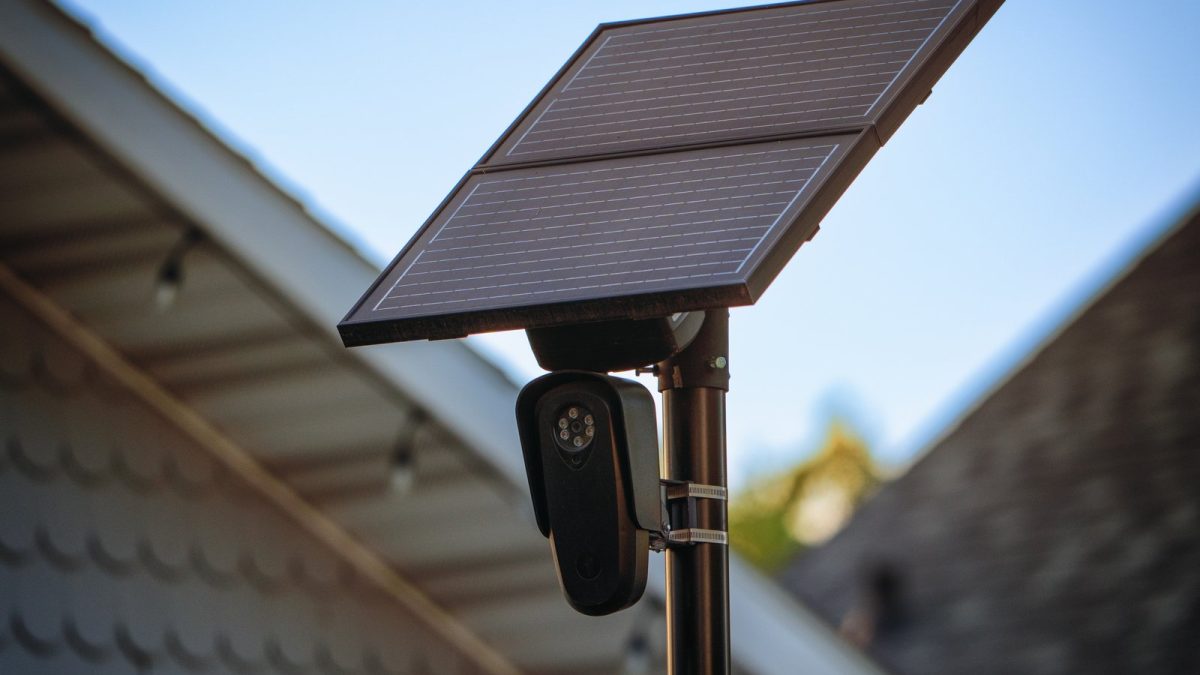
There is a fair chance that a small camera on a pole near your home photographs every license plate that passes it. Flock Safety operates more than 100,000 automated license plate reader cameras across 49 states, and its network scans roughly 20 billion plates per month.1 In most of the cities where those cameras operate, no elected body ever voted to install them. A police chief or a city manager signed a contract, often a no-cost trial that required no budget approval, and residents learned the cameras existed after they were already recording.
The record of what happens next is now extensive. Local police ran more than 4,000 immigration-related searches through Flock’s network on behalf of federal agencies, according to reporting by 404 Media.2 Mountain View, California terminated its contract after an investigation found roughly 600,000 searches of its data in a single year by more than 250 agencies the city had never approved.3 A class action filed in February 2026 alleges that out-of-state and federal agencies searched the San Francisco Police Department’s Flock database more than 1.6 million times in seven months.4 Flock has installed cameras without required permits in at least five states, and two state transportation agencies barred it from new installations.5 It has made false statements to city councils about what its systems do,1 and in February 2026 it rewrote its standard contract terms to make cancellation harder even when a council votes against approval.6
The public response so far has been cancellation. More than 50 cities have ended their contracts since late 2024.7 In the same period, roughly 800 cities signed new ones.7 Cancellation works one council at a time, and it happens only after the cameras are installed and the data has already left the jurisdiction. Every state law passed so far, including Washington’s Driver Privacy Act, regulates how the data can be used after the cameras exist.7 No law anywhere attaches a consequence to the person who decides to install them without asking the public. A statute aimed at that gap would make that decision a crime. It would do six things.
First, it would require public consent before deployment. No government agency may install license plate reader cameras, including free trials, pilot programs, and donated cameras, without an ordinance passed by recorded vote after at least two public hearings noticed 30 days in advance. The hearing notice must disclose the camera locations, the vendor, the full contract, the data collected, the retention period, and every entity that will have access.
Second, it would make unauthorized deployment a felony. An official who knowingly installs or authorizes these systems without that ordinance faces up to five years in prison. Concealing the system, lying to the council about it, or continuing to operate it more than 30 days after written notice raises the maximum to ten years. Conviction forfeits the office and disqualifies the person from holding public office for ten years, and public funds may not pay the fines.
Third, it would give the state attorney general direct authority to prosecute, so enforcement does not depend on a county prosecutor deciding whether to charge officials that prosecutor works with every day.
Fourth, it would make the company pay. A vendor that installs cameras without first receiving a certified copy of the authorizing ordinance owes every driver it scanned $1,000 per scan, or $5,000 per scan if the violation was willful. One camera records thousands of vehicles per day, so the liability for a single unauthorized installation passes one million dollars within days. The vendor also owes the state $10,000 per camera per day, must delete all data collected, and loses eligibility for public contracts in the state for five years.
Fifth, it would regulate the systems the public does approve. Data may not be shared with federal agencies or out-of-state entities without a warrant. It may not be used for immigration enforcement, for surveillance of health care facilities or protests, or for any officer’s personal purposes. It must be deleted within 30 days, and every search must be logged in a public audit record. Willful violation of these rules is also a felony.
Sixth, it would let residents enforce it. Any person whose plate was scanned can sue, and a winning plaintiff collects attorney fees. Systems already operating get 180 days to obtain public authorization or shut down and be removed.
The penalty grades have precedent. Federal law, 18 U.S.C. § 2511, makes intercepting a single phone conversation a felony punishable by up to five years.8 Texas has made it a jailable offense since 1967 for officials to knowingly conduct public business in an unlawfully closed meeting.9 Illinois grades official misconduct as a Class 3 felony.10 The per-scan damages structure copies the Illinois Biometric Information Privacy Act, which sets $1,000 to $5,000 per violation11 and produced a $650 million settlement from Facebook.12 If intercepting one conversation is a five-year felony, deploying a network that records the movements of every driver in a city without authorization can be graded the same or higher.
References
- State of Surveillance, “30+ Cities Have Canceled Flock Safety Contracts. The List Keeps Growing.” May 19, 2026. https://stateofsurveillance.org/news/flock-safety-cancel-wave-30-cities-alpr-surveillance-contracts-2026/
- Jason Koebler and Joseph Cox, “ICE Taps into Nationwide AI-Enabled Camera Network, Data Shows,” 404 Media, May 27, 2025. https://www.404media.co/ice-taps-into-nationwide-ai-enabled-camera-network-data-shows/
- Emily Margaretten, “City Council terminates Mountain View’s license plate camera contract,” Mountain View Voice, February 25, 2026. https://www.mv-voice.com/city-government/2026/02/25/city-council-terminates-mountain-views-license-plate-camera-contract/
- KTVU, “Class action lawsuit alleges Flock license plate readers violate CA law and privacy of residents,” February 2026. https://www.ktvu.com/news/class-action-lawsuit-alleges-flock-license-plate-readers-violate-ca-law-privacy-residents
- Thomas Brewster, “This $4 Billion Car Surveillance Startup Says It Cuts Crime. But It Likely Broke The Law.” Forbes, February 27, 2024. https://www.forbes.com/sites/thomasbrewster/2024/02/27/flock-safety-surveillance-broke-state-law/
- American Civil Liberties Union, “Municipalities: Beware of Changes in Flock’s Legal Terms if You’re Using or Considering License Plate Readers,” April 2026. https://www.aclu.org/news/privacy-technology/tracking-alpr-cameras/flocks-terms-and-conditions
- Tech Times, “Flock Safety Crosses 100,000 Cameras as 53 Cities Cancel Over Unauthorized Federal Data Access,” June 29, 2026. https://www.techtimes.com/articles/319317/20260629/flock-safety-crosses-100000-cameras-53-cities-cancel-over-unauthorized-federal-data-access.htm
- 18 U.S.C. § 2511.
- Texas Government Code § 551.144.
- 720 ILCS 5/33-3 (Illinois official misconduct statute).
- 740 ILCS 14/20 (Illinois Biometric Information Privacy Act, damages provision).
- In re Facebook Biometric Information Privacy Litigation, 522 F. Supp. 3d 617 (N.D. Cal. 2021) (final approval of $650 million class settlement).
Originally published on The Existentialist Republic (Substack).
Related: Law enforcement reporting and calls to action from The Existentialist Republic · Model legislation from The Existentialist Republic
Join the discussion on r/ExistentialRepublic